How Sports Clubs Track Fatigue: Why Monitoring Training Load Reduces Injuries and Improves Performance
Meta Description: Fatigue tracking helps football and basketball clubs reduce injury risk, manage training load, and improve player performance. Learn how coaches monitor training intensity and how tools like ClubMeter make fatigue management easier.
Date of creation: 2026-08-10
Industry Focus: Football • Basketball • Professional Sports • Youth Academies • Performance Coaching
The Problem: When More Training Starts Hurting Performance
Imagine a football team preparing for an important match.
The players have trained hard all week. The intensity has been high, the tactical sessions have been demanding, and several players also played a full 90 minutes three days earlier.
On paper, everything looks fine.
But during Friday's training session, one of the team's best players looks slower than usual. His movements are less explosive. His concentration is dropping. The coach assumes he simply needs to work harder.
On Sunday, he starts the match.
Thirty minutes into the second half, he pulls his hamstring.
This is exactly the type of situation that fatigue tracking and training load monitoring are designed to help prevent.
Fatigue itself is not necessarily bad. Training creates fatigue, and recovering from that training is what ultimately makes athletes stronger and better. The problem occurs when training stress consistently exceeds the player's ability to recover.
For modern sports clubs, the goal is therefore not to eliminate fatigue.
The goal is to manage it.
What Is Fatigue Tracking in Sports?
Fatigue tracking is the process of monitoring how much physical and competitive stress an athlete experiences over time and comparing it with their recovery and performance.
Coaches can track factors such as:
- Training duration
- Training intensity
- Match minutes
- Number of matches played
- High-intensity sessions
- Recovery days
- Player-reported fatigue
- Changes in performance
- Training load over multiple weeks
One of the simplest approaches is to record a player's session RPE (Rating of Perceived Exertion).
For example:
Training Load = Session Duration × RPE
A 90-minute session rated 8/10 gives a training load of:
90 × 8 = 720 arbitrary units
Another 60-minute recovery session rated 3/10 produces:
60 × 3 = 180 units
This gives the coaching staff a simple way to understand that two sessions of different duration and intensity can place very different demands on players.
Why Fatigue Tracking Matters for Injury Prevention
Most sports injuries are not caused by one isolated training session.
Often, the problem is a combination of accumulated fatigue, insufficient recovery, high training loads, competition demands, and sudden changes in workload.
Consider a football player who normally trains at moderate intensity.
If his weekly training load suddenly doubles because the team adds extra conditioning sessions and he plays two full matches, his body may not have enough time to adapt.
This is where training load monitoring becomes valuable.
Instead of asking:
"Does this player look tired today?"
The coach can ask:
"How much load has this player accumulated over the last 7, 14, and 28 days?"
That historical context is much more useful.
Fatigue tracking can help coaches identify players who may require:
- Reduced training volume
- Additional recovery
- Individualized conditioning
- Modified training intensity
- Fewer match minutes
- A recovery session instead of a high-intensity session
It does not guarantee that injuries will be prevented, but it gives coaches significantly more information for making better decisions.
Example: Fatigue Tracking in Football
Consider a professional football team playing three matches in eight days.
Player A plays:
- 90 minutes — Saturday
- 75 minutes — Tuesday
- 90 minutes — Sunday
During the same period, he participates in several high-intensity training sessions.
Without centralized tracking, the coach may simply see that Player A attended every training session.
With training load monitoring, however, the picture is different.
The coach can see that Player A has accumulated significantly more match and training load than most of the squad.
Instead of giving him another full-intensity training session, the coaching staff could reduce his workload, provide additional recovery, or modify his training drills.
Meanwhile, a substitute who played only 20 minutes during the previous match might require a completely different training stimulus.
The objective is not to train everyone equally.
It is to give each player the appropriate amount of stimulus for where they currently are.
Example: Fatigue Tracking in Basketball
Basketball creates a different fatigue profile.
Players repeatedly accelerate, decelerate, jump, change direction, defend, and sprint over relatively short distances.
Imagine a basketball team playing four games in seven days.
A player averaging 35 minutes per game may accumulate considerably more competitive stress than a bench player averaging 12 minutes.
If the coaching staff combines:
Match minutes + training duration + training intensity + player feedback
they can identify who needs additional recovery and who may actually need more training stimulus.
For example, a starting guard who has played three high-minute games might receive a lighter practice focused on tactics and shooting rather than another demanding conditioning session.
A younger player who has barely played may receive additional physical work.
This approach allows coaches to individualize training without losing the team's overall training objectives.
How ClubMeter Helps Coaches Track Training Load
The biggest challenge with fatigue monitoring is not necessarily understanding the concept.
It is collecting and organizing the data consistently.
This is where a platform like ClubMeter can become useful.
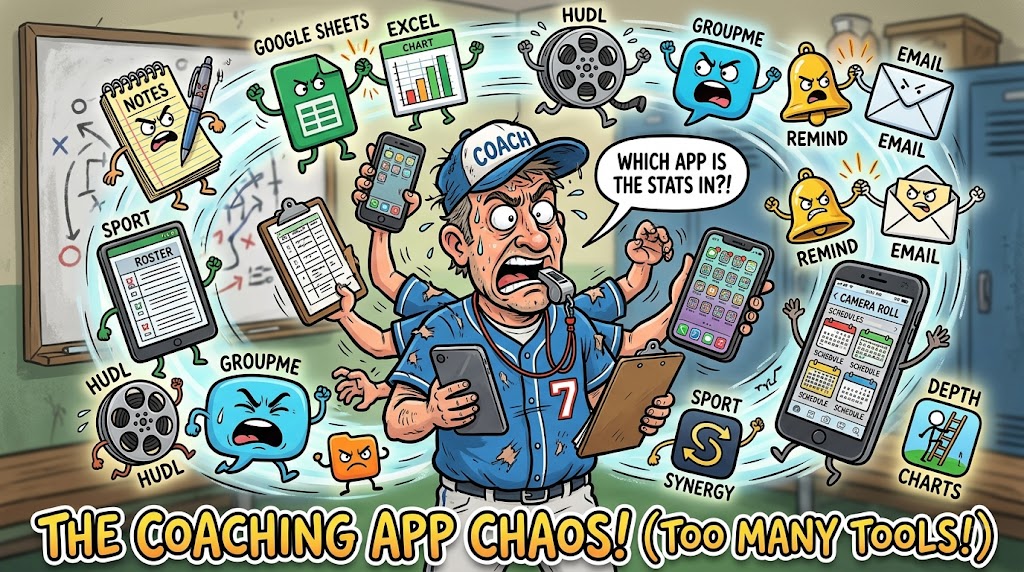
Instead of keeping training information scattered across spreadsheets, notebooks, messaging apps, and memory, coaches can track the team's training sessions and matches in one place.
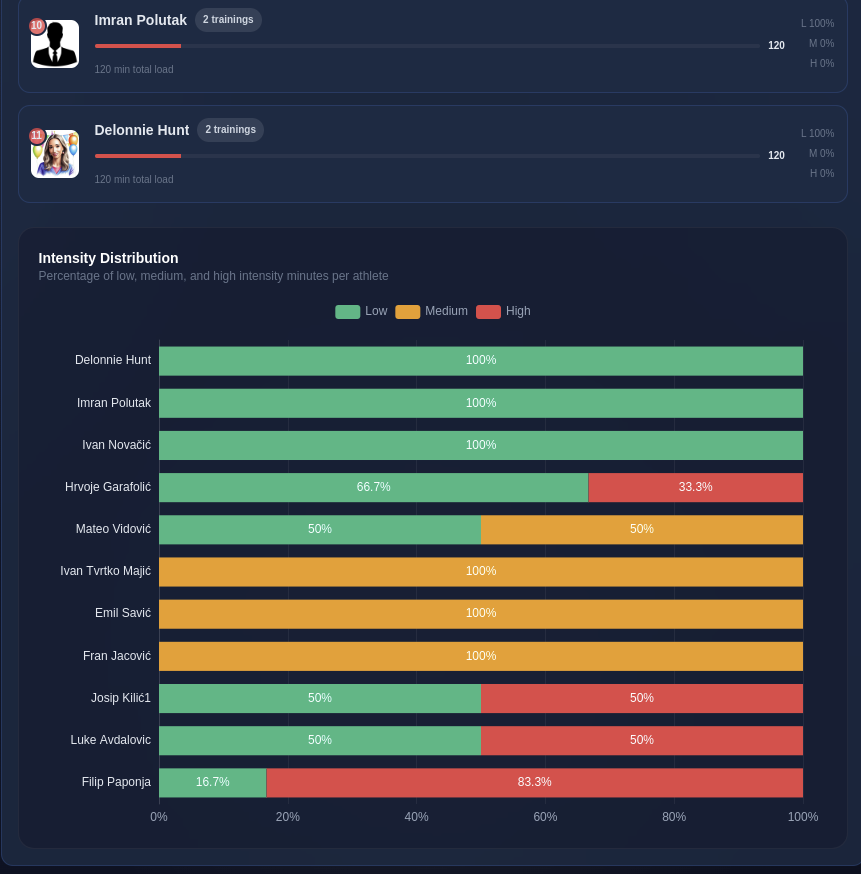
For each session, coaches can record information such as:
- Training duration
- Training intensity
- Session type
- Player participation
- Match minutes
- Individual workload
- Training history
Over time, this creates a much clearer picture of each player's workload.
A coach can look beyond today's training session and understand what happened during the previous days and weeks.
That historical context is critical.
A session that appears normal in isolation may be excessive when it comes after several demanding sessions.
From "Training Harder" to "Training Smarter"
Modern sports performance is increasingly moving away from the idea that the best athletes simply need to train harder.
The better question is:
What is the right amount of training for this athlete at this moment?
Fatigue tracking helps answer that question.
For football clubs, it can help coaches manage congested schedules, match minutes, and high-intensity training.
For basketball clubs, it can help manage playing time, repeated high-intensity movements, and demanding game schedules.
For youth academies, it can provide coaches with a structured way to monitor developing athletes and avoid unnecessarily large increases in workload.
And for performance departments, historical training data can become a valuable resource for understanding how workload affects performance over an entire season.
The Bigger Benefit: Better Decisions
Fatigue monitoring should not replace coaching experience.
It should improve it.
The coach still decides what the team needs. The data simply provides another layer of information.
When training load, match participation, intensity, and historical workload are tracked consistently, coaches can make more informed decisions about when to push players and when to allow them to recover.
The result is a more systematic approach to injury risk management, player development, and performance optimization.
Because ultimately, the objective is not to have players train as much as possible.
It is to have them ready to perform when it matters most.
Key Takeaways
- Fatigue is a normal part of athletic training, but excessive accumulated fatigue can negatively affect performance and recovery.
- Training load monitoring helps coaches understand how much stress players are experiencing over time.
- Tracking training intensity, duration, and match minutes provides useful context for individual workload.
- Football teams can use fatigue tracking to manage congested fixture schedules and high match loads.
- Basketball teams can use it to manage playing time and repeated high-intensity demands.
- Platforms such as ClubMeter help coaches centralize training and match data instead of relying on disconnected spreadsheets or memory.
- The goal is not simply to reduce training. It is to optimize the balance between training stimulus and recovery.
Conclusion
The best-performing sports clubs increasingly treat training load as something that should be measured, understood, and managed.
A player's workload does not exist in isolation. Today's training is connected to yesterday's match, last week's sessions, and the accumulated demands of the entire season.
By tracking every training session, match, duration, and intensity, coaches can build a clearer picture of how their players are responding to the demands placed on them.
Tools like ClubMeter make this process easier by giving coaching staff a centralized view of training and match activity.
The result is a more data-driven approach to one of the most important questions in sport:
When should we push the player — and when should we let them recover?